
Sport News
Livescore – A Practical Guide to Following Football Matches in Real Time
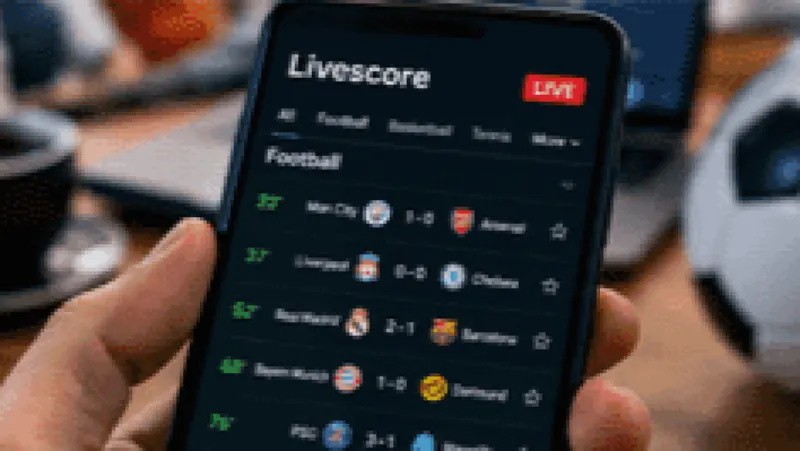
Real-time football coverage allows supporters to follow matches from almost anywhere. Whether commuting, working, or tracking several games simultaneously, fans can check goals and major events without continuously watching a broadcast.
Modern livescore pages can provide far more than the current score. Match status, cards, substitutions, lineups, and statistics can all help explain what is happening. The challenge is learning how to interpret this information without drawing conclusions too quickly.
Use keonhacai5 to Establish the Match Context

Before following a game, users checking keonhacai5 can review the competition, teams, kickoff time, and venue.
This establishes the basic context.
Fans should know whether they are following a league fixture, cup match, or two-leg knockout tie because competition rules affect how the score should be interpreted.
Checking the correct timezone is also important when following international football.
Follow the Match Status

A score has different meaning depending on the stage of the game.
A 1–0 lead after fifteen minutes leaves plenty of time for the match to change. The same score during stoppage time creates a very different situation.
Users should therefore check whether the game is in the first half, halftime, second half, extra time, or finished.
Read Livescore as a Timeline

Using Livescore effectively means paying attention to the sequence of events.
A goal, red card, injury, or substitution can change the tactical structure of a match.
If a team receives a red card early, later possession and shot statistics need to be interpreted with that disadvantage in mind.
The order and timing of events often explain more than the final totals.
Check Starting Lineups

Confirmed lineups show which players the managers actually selected.
This can reveal rotation, formation changes, or the return of important players.
A team's recent form may become less relevant if several regular starters are absent.
Predicted lineups can provide an early idea, but they should be replaced by official information once available.
Interpret Goals in Context
The timing of a goal can influence everything that follows.
A team scoring early may choose to defend more cautiously. The opponent may then dominate possession because it needs to chase the match.
A late equalizer can force both teams to take new risks.
This is why simply counting goals does not explain the tactical story.
Compare Possession and Chances
Possession percentages are easy to understand but should not be treated as a direct measure of attacking quality.
Some teams deliberately allow opponents to keep the ball in harmless areas before counterattacking quickly.
When available, shots on target and other attacking statistics can provide additional context.
Even then, statistics should be interpreted together rather than individually.
Pay Attention to Cards
Yellow and red cards can influence player behavior and tactical choices.
A defender already on a yellow card may become more cautious in challenges.
A red card has an even greater impact because one team must continue with fewer players.
The minute of the card matters because an early dismissal can shape most of the match.
Track Substitutions
Substitutions often reveal tactical intentions.
A manager may replace a midfielder with an attacker when chasing a goal or introduce an additional defender to protect a lead.
However, substitutions can also be caused by injuries or fatigue.
Users should therefore avoid assuming every change has the same tactical meaning.
Expect Occasional Data Corrections
Real-time information can change after review.
A goal may be disallowed, a penalty decision reversed, or a scorer corrected.
Fans should allow time for official confirmation, particularly when video review is involved.
Fast notifications are useful, but speed can occasionally come before final verification.
Understand Extra Time and Penalties
Cup competitions can continue beyond regulation time.
A livescore page may show extra time, penalties, or an aggregate score from two legs.
Knowing the tournament rules helps users understand which team is actually progressing.
The current match score is not always the complete competitive picture.
Avoid Assuming a Match Is Finished Early
Football frequently produces late changes.
Goals in stoppage time, penalties, defensive errors, and set pieces can transform the result.
Even a two-goal advantage is not a mathematical guarantee until the game has ended.
Live information should therefore be treated as a developing record rather than a prediction.
Use Multiple Indicators Together
The strongest understanding comes from combining the score, timeline, lineups, cards, substitutions, and available statistics.
Each element answers a different question about the match.
Together, they help supporters understand not only what the score is but also how the game reached that point.
Conclusion
Livescore pages are valuable tools for supporters who want fast football updates without watching every match continuously. Their usefulness extends far beyond displaying goals.
By reading the timeline, checking lineups, tracking cards and substitutions, and interpreting statistics in context, fans can develop a clearer picture of the game. Real-time data remains most useful when readers recognize that football can change until the final whistle.