
Sport News
How Football Training Methods Have Changed Over the Past Decades
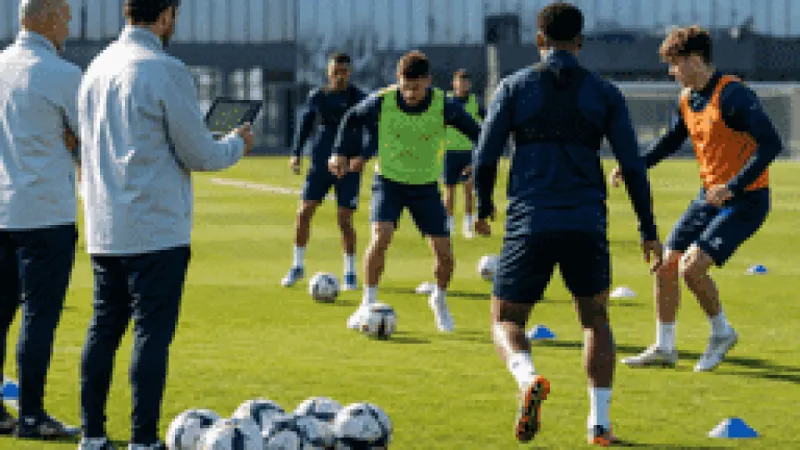
Football training has never stood still. Even a session conducted in the 1960s will have some things recognizable: the ball, running, exercises, and the game would all be there. However, practically everything else related to these activities is different. The previous generations trained with repetitions, general endurance, and the coach’s eye. Now all footballers train in well-thought-out weekly programs that unite tactics, physical loads, strength work, recovery and performance data.
Sport and training analysis is also important for those who examine football from outside the ground. Fans can take into account injuries, recent minutes, rotations, and predicted line-ups before giving their views on the match. On (Arab: مراهنات كرة القدم), users can follow football markets alongside publicly available team information. A busy schedule or return from injury can shift expectations before a match. So, such data has made sports science a central part of modern football training rather than something coaches simply had to estimate.
From Fitness Drills to Periodized Training
Football conditioning used to be quite simple: running, sprinting, technical drills, and practice matches. Coaches judged fitness mostly by watching players, while each of the squad followed the same routine. Today, preparation updates reach supporters much faster. So, users who want to download the betting app aviator to make some predictions may also look at training loads, injuries, and overall team condition before a game.. A player returning after several weeks out may still lack full match fitness. Heavy training can also affect freshness before an important game.
With increasing professionalism in the sport, the science of sports started influencing the planning of training activities. The concept of periodization became one of the key concepts in the planning of training programs. This involved varying the intensity, volumes and recovery depending on the fixture calendar.
Why the Weekly Rhythm Became More Important
Current preparations are based more on game day. A team that plays once a week can start with recovery training, peak in the middle of the week, and then taper physical demands before the next match. Physical load usually tapers as game day gets closer. Bench players might require extra work since they do not get much physical load compared to regular players.
A simplified modern training week may include:
-
Recovery sessions for players who participated in the majority of the last game;
-
A tough training program including running, pressing, and bigger space exercises;
-
Position-specific training for defenders, midfielders, strikers, and goalkeepers;
-
Tactical and speed drills for the upcoming match;
-
Pre-match session focusing on sharpness, positioning, and set plays.
Such a structure allows the coach to manage fatigue while at the same time keeping his team prepared for the next game. The advantage is that the coaching staff will have enough time to modify the training schedule according to the state of health and playing position of each of the players.
Data and Technology Changed What Coaches Can See

The most noticeable distinction between past and current training is the measure of everything. Coaches were able to observe the level of fatigue of the participants and could even ask them how they felt, but not much was done regarding the quantification of all the processes taking place during the sessions. Contemporary technologies make it possible to analyze everything via the use of cameras, local positioning systems, and GPS/GNSS devices.
Coaching teams can therefore analyze total distance covered, high-speed running, acceleration, deceleration, and changes in movements across the pitch. The more data, however, does not necessarily make for better decisions. Coaches normally categorize data as either external loads, such as running and sprinting, or internal loads, meaning the reaction of the player's body. No one measure gives a complete picture.
Video analysis has also revolutionized preparation from the tactical aspect in a similar fashion. Coaches used to rely mainly on memory and writing as well as basic drawings. It is now possible for analysts to divide games into periods where pressing happens, transition play, build-ups, and set pieces occur.
The Information Modern Staff May Monitor
Performance departments can combine several types of data instead of relying on one statistic:
-
total distance, sprint distance and repeated high-speed efforts;
-
accelerations, decelerations and changes of direction;
-
heart-rate response and perceived exertion;
-
sleep, soreness and general recovery feedback;
-
role-specific actions such as pressing runs or overlaps;
-
recent match minutes, travel and return-from-injury status.
AI is going to add another dimension. Technology such as computer vision can classify videos and detect patterns, while analysis can spot unusual workload fluctuations. Both should be considered aids instead of replacements for coaches and medics. The quality of the output produced is dependent on the quality of the input provided.
Training Today Is More Individual, Tactical and Recovery-Focused
Current teams don’t necessarily have the same training for everyone. A starting player who played for the duration of 90 minutes will do recovery while the substitute will do more conditioning exercises. A wide player might need several fast sprints while a midfielder could be working on receiving and running through the lines. The keepers will be doing their own programs while the injured players will usually go through various stages before going back to full training with the team.
Strength training has been made more specific as well. The goal is not merely increasing muscle mass. There is now force production, acceleration, jumping, deceleration, changing of directions, and repetition of football skills. Exercises in the gym will be selected based on how they can help on the field.
There has also been less separation of tactical and physical training. Small-sided games, positional exercises, pressing, and transition can combine tactical and physical aspects. Coaches can modify the field, number of players, and rules to suit their needs. Position-specific exercises can gradually be taken from simple movements to real football.
Recovery Became Part of Training, Not Time Away From It
Another important transformation pertains to recovery. Traditionally, football players regarded recovery as something independent from tough training sessions. Nowadays, successful football clubs regard sleep, hydration, nutrition, mobility, and easy training days as an integral element of training.
The issue is especially important when there are national, continental, and international games during that period. Modern football pays close attention to various workloads and their influence on performance, risk of injuries, and the well-being of footballers. Even though modern football has advanced technologies, it remains challenging to balance training and recovery.
The most significant transformation in this field is the transition from general conditioning towards more intelligent and customized training. Football always demanded endurance, techniques, repetition, and toughness, but the modern approach gives coaches more opportunities to learn the needs of every player individually. Technology provides more data, but the value of this information depends on its effective use.