
esports news
How Analytics Changed Basketball Forever
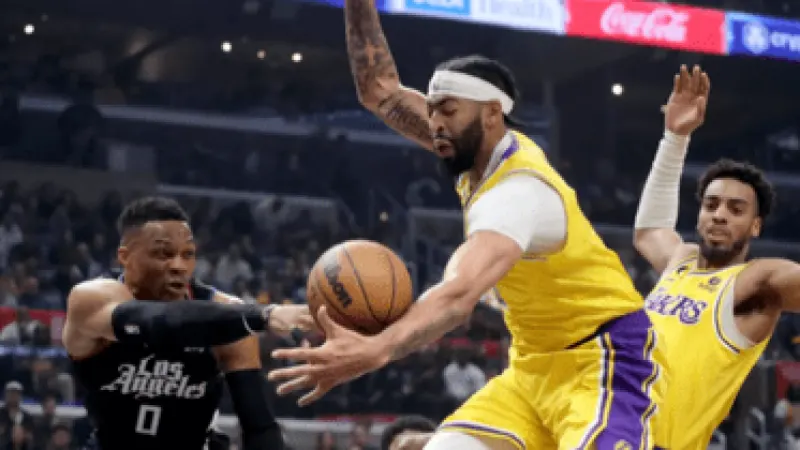
For decades, basketball was guided by instinct, tradition, and the famous phrase, the eye test. Coaches trusted experience, scouts trusted intuition, and many tactical decisions survived simply because they had always existed.
Then something unusual happened: spreadsheets started arguing with basketball legends and often winning. In today's era, where fans track advanced statistics almost as closely as points scored, analytics influences everything from roster building to live betting markets.
Big gaming websites like RajBet reflect this growing appetite for data-driven sports analysis, but the transformation began long before modern sportsbooks embraced statistics. It started when basketball itself became measurable in ways nobody had imagined.
From Gut Feeling to Mathematical Advantage
The first phase of the analytics revolution was not about computers replacing coaches. It was about asking uncomfortable questions.
Why were teams taking so many long two-point shots? Were certain players being overvalued because of reputation? Could a less athletic roster outperform a more talented one through smarter decisions?
No figure became more associated with these questions than Daryl Morey of the Houston Rockets. Morey built one of basketball's most influential front offices around statistical efficiency.
His philosophy later became known as "Moreyball" and focused heavily on shots at the rim and three-pointers while minimizing mid-range attempts.
During the 2017-18 season, Houston took an extraordinary percentage of its shots either from beyond the arc or directly near the basket, becoming one of the clearest examples of analytics shaping strategy.
Key Discoveries That Changed Basketball Thinking:
-
Three-pointers generated superior expected value because a successful shot was worth 50% more than a two-pointer.
-
Rim attempts consistently produced the highest efficiency rates across large datasets.
-
Mid-range shots often delivered the weakest points-per-attempt returns despite their popularity.
-
Possession-based metrics exposed hidden player value beyond traditional box scores.
-
Lineup combinations became measurable assets, not coaching guesses.
-
Shot location data revealed offensive habits opponents could exploit.
-
Pace and spacing proved strongly linked to offensive efficiency.
-
Player tracking technology created entirely new performance categories.
-
Draft evaluations increasingly relied on predictive models rather than highlight reels alone.
-
Decision-making under pressure became quantifiable through advanced situational statistics.
The Houston Rockets became the laboratory where many of these theories were tested publicly. Critics argued that basketball was becoming robotic, while supporters pointed to wins and playoff appearances as evidence that the numbers worked.
The debate itself demonstrated how powerful analytics had become. Basketball was no longer simply played on hardwood; it was also being studied through millions of data points.
The lasting impact was not the death of intuition but its evolution. Coaches still trusted their eyes. They simply had far better evidence supporting what they saw.
Three-Point Revolution Nobody Could Stop
If there is one visible symbol of basketball analytics, it is the three-point shot. The modern NBA often looks completely different from the league that existed twenty years ago, and statistics largely explain why.
The logic was surprisingly simple. A three-pointer did not need a dramatically higher success rate than a two-pointer to become more valuable. Once analysts demonstrated the long-term mathematical advantage, teams gradually adjusted. Then the adjustment became a movement.
The Houston Rockets pushed the concept aggressively, while the Golden State Warriors demonstrated its championship potential. Stephen Curry transformed what had previously been considered difficult shots into routine offensive weapons, proving that analytics and extraordinary talent could work together rather than compete against one another.
How Analytics Reshaped Offensive Strategy
|
Strategic Change |
Practical Impact on the Court |
|
Increased three-point volume |
Higher scoring efficiency over large sample sizes |
|
Reduced mid-range attempts |
Fewer low-value possessions |
|
Expanded floor spacing |
More driving lanes for ball handlers |
|
Positionless basketball concepts |
Greater lineup flexibility |
|
Faster offensive pace |
More possessions per game |
|
Shot-quality evaluation |
Better offensive decision-making |
|
Data-based play design |
Increased efficiency in set plays |
|
Matchup exploitation models |
More targeted attacks against weaknesses |
|
Real-time performance tracking |
Faster tactical adjustments |
These tactical shifts did not remain exclusive to professional teams. Media coverage, fantasy sports, sportsbooks, and fan discussions increasingly adopted analytical language.
A good example is modern basketball betting. Markets now incorporate advanced metrics such as offensive rating, defensive rating, pace, shot profile efficiency, and lineup performance.
Sportsbooks including RajBet increasingly operate in an environment where both bookmakers and bettors have access to sophisticated statistical models. While numbers never eliminate uncertainty, they create a more informed picture of what is happening beneath the final score.
Signs of the Three-Point Revolution Everywhere:
-
NBA centers now average significantly more three-point attempts than a decade ago, reflecting the shift toward floor spacing.
-
Youth development programs introduce long-range shooting drills at younger ages, accelerating skill adaptation.
-
Corner-three specialists consistently rank among the league's most efficient role players due to the shorter shooting distance.
-
Defenses allocate more resources to closing out perimeter shooters, even at the risk of opening driving lanes.
-
Team shot distributions increasingly concentrate on three-pointers and attempts within five feet of the basket.
-
Fast-break situations frequently generate open three-point opportunities before traditional paint attacks develop.
-
Stretch bigs force opposing centers away from the rim, reducing their shot-blocking influence.
-
Offensive spacing metrics now play a major role in lineup construction and tactical planning.
-
College and youth teams increasingly adopt shot-selection principles first popularized by NBA analytics departments.
Of course, every revolution creates new questions. Some critics argue that analytics has made teams too similar. Recent discussions around league-wide three-point volume suggest basketball may now be confronting the consequences of optimization itself. When every team follows the same efficient formula, strategic variety can decline.
Yet even critics generally agree on one point: there is no returning to the pre-analytics era.
The Invisible Game Behind Every Possession
The most important analytical revolution may actually be the one fans rarely see.
Today, basketball organizations collect enormous quantities of tracking data. Cameras installed throughout arenas monitor player movements, spacing, acceleration, defensive positioning, passing angles, and countless other variables. What once required subjective observation can now be measured frame by frame.
This information affects far more than shooting strategy.
Modern Analytics Applications
|
Analytical Area |
Real-World Use |
|
Player tracking systems |
Measuring movement and positioning |
|
Injury prevention models |
Managing workload and recovery |
|
Defensive matchup analysis |
Identifying favorable assignments |
|
Shot probability models |
Evaluating offensive choices |
|
Draft forecasting tools |
Predicting long-term player value |
|
Lineup optimization |
Finding effective combinations |
|
Opponent scouting databases |
Preparing game plans |
|
Ball movement analysis |
Improving offensive flow |
|
Fatigue monitoring systems |
Reducing performance decline |
What makes modern analytics fascinating is that it often confirms ideas coaches suspected for years while simultaneously discovering patterns humans would never notice.
Academic research using tracking data has shown that factors such as teammate movement, defender distance, spacing quality, and ball trajectory can be analyzed with remarkable precision. Advanced models can even predict the likelihood of a shot going in before the ball reaches the basket.
The practical implications are enormous.
Areas Where Analytics Continues Expanding:
-
AI-assisted scouting tools process thousands of player possessions, helping teams identify strengths, weaknesses, and potential transfer targets faster.
-
Automated video analysis platforms tag key actions instantly, reducing hours of manual film review for coaches and analysts.
-
Injury-risk models combine workload, movement, and recovery data to help prevent soft-tissue injuries and overtraining.
-
Passing-network analysis reveals which player combinations generate the most efficient offensive possessions.
-
Real-time analytics dashboards provide coaches with live performance insights during games and training sessions.
-
Data-driven development programs create individualized improvement plans based on shooting, movement, and decision-making metrics.
-
Advanced forecasting models improve game predictions and betting analysis by incorporating hundreds of statistical variables.
-
Personalized training recommendations adapt to each athlete's physical profile, playing style, and performance trends.
-
Pre-game simulation models test thousands of tactical scenarios, helping teams prepare for specific opponents and match situations.
There is something slightly amusing about the modern situation. Basketball was invented with a peach basket, a ball, and thirteen basic rules. More than a century later, teams employ data scientists, machine-learning specialists, and performance analysts to understand what happens during a simple pick-and-roll.
Yet that complexity is precisely why the sport remains so fascinating. The deeper analysts dig, the more layers they uncover.
Conclusion
Analytics did not replace basketball's human element. It sharpened it. The revolution changed shot selection, roster construction, player development, coaching strategy, and even how fans understand the game.
While debates about over-optimization continue, the evidence is overwhelming: modern basketball is smarter, faster, and more informed because of analytics. The numbers did not take control of the sport—they simply revealed parts of it that were hidden all along.