
Updates
Can Anyone Dominate Tennis Like Djokovic Again?
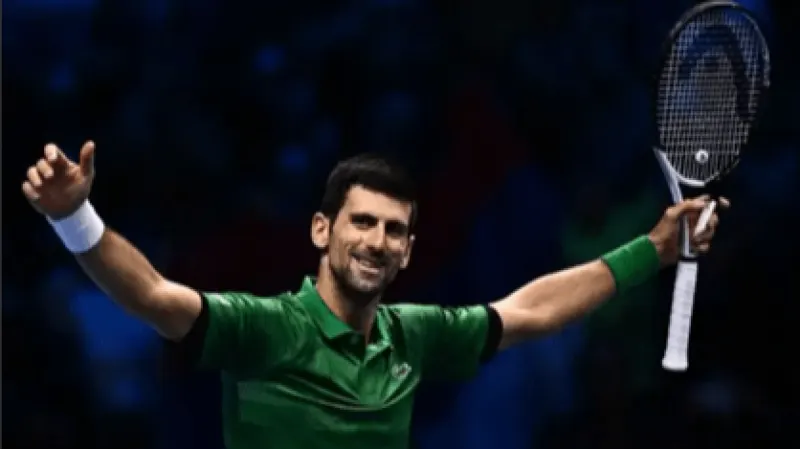
For nearly two decades, men’s tennis has lived through an era that may eventually look less like a sporting period and more like a historical anomaly.
Novak Djokovic built a career around consistency so extreme that it often appeared mechanical, yet it was achieved in one of the most physically demanding individual sports in the world.
As younger stars emerge and betting platforms such as RajBet analyze every shift in tournament odds, a fascinating question remains: was Djokovic the final example of long-term tennis domination, or is another player already beginning a similar journey without us fully noticing?
The Problem with Comparing Anyone to Djokovic
Every generation believes it has found the next dominant champion. Tennis history is filled with moments when observers thought a player was about to control the sport for a decade. Usually, reality intervened.
The challenge is not winning a Grand Slam. The challenge is repeating that success for fifteen years while adapting to new rivals, surfaces, coaches, equipment trends, and physical limitations. Djokovic did not merely win tournaments. He survived multiple eras within the same sport.
A useful way to understand the scale of the challenge is to compare the characteristics shared by the greatest periods of dominance in modern tennis.
|
Dominance Factor |
Djokovic Example |
Why It Matters |
|
Physical durability |
Remained competitive deep into his 30s |
Extended peak years beyond historical norms |
|
Surface versatility |
Major titles on hard, clay, and grass courts |
Removed surface-specific weaknesses |
|
Mental resilience |
Numerous comeback victories from difficult positions |
Allowed consistent success in pressure moments |
|
Tactical adaptation |
Adjusted style across multiple generations of opponents |
Prevented rivals from solving his game permanently |
|
Return game quality |
Considered among the greatest returners ever |
Neutralized even elite servers |
|
Grand Slam consistency |
Reached latter stages of majors repeatedly for over a decade |
Created continuous title opportunities |
|
Ranking stability |
Spent record time near the top of the rankings |
Reduced periods of decline |
|
Injury management |
Avoided prolonged career interruptions |
Preserved momentum across seasons |
|
Motivation longevity |
Continued chasing records after historic achievements |
Prevented psychological burnout |
Statistics alone do not fully explain the phenomenon. Many players have possessed elite athleticism or powerful strokes. Very few have maintained elite decision-making under pressure for such a long period.
Real-life examples demonstrate the difficulty. Carlos Alcaraz has already won multiple Grand Slam titles and displays remarkable versatility. Jannik Sinner has established himself as a major force on hard courts.
Yet both players are competing in an environment where the depth of elite talent may be greater than during many previous eras.
Conditions a future dominant player would likely need:
-
Extraordinary injury resistance across at least 10–15 seasons.
-
Elite results on every major surface.
-
Ability to remain relevant after tactical shifts in the sport.
-
Consistent performance during five-set matches.
-
Stable coaching and support structures.
-
Strong psychological recovery after losses.
-
Motivation beyond financial rewards.
-
Continuous adaptation to younger challengers.
-
Exceptional scheduling and workload management.
Even this list may be incomplete. Dominance at Djokovic's level often involves qualities that become visible only in retrospect. At the time, they simply look like another difficult match won.
Modern Tennis Environment May Prevent Another Dynasty
If a future champion hopes to repeat Djokovic’s level of control, the current tennis ecosystem presents challenges that previous generations rarely faced.
For starters, talent development has become increasingly global. Elite academies exist across Europe, North America, South America, Asia, and Australia. Promising juniors receive advanced data analysis, nutrition support, sports psychology assistance, and biomechanical coaching earlier than ever before.
A useful comparison can be seen in how competitive depth has evolved.
|
Era Characteristic |
Earlier Generations |
Current Environment |
|
Global talent pipeline |
More concentrated geographically |
Highly international |
|
Sports science access |
Uneven between players |
Widely available |
|
Match analytics |
Limited |
Extensive real-time analysis |
|
Recovery technology |
Relatively basic |
Advanced monitoring systems |
|
Video scouting |
Less detailed |
Comprehensive opponent databases |
|
Coaching resources |
Restricted to top players |
Available across rankings |
|
Physical preparation |
Variable standards |
Highly optimized |
|
Tactical information |
Harder to obtain |
Easily shared and analyzed |
The result is a fascinating paradox. Players are becoming better prepared than ever, but that preparation makes it harder for any single player to separate themselves from the field.
Recent examples illustrate this trend. Even dominant performers such as Alcaraz and Sinner regularly face opponents capable of producing elite-level tennis for several hours. Rankings outside the Top 20 are considerably stronger than many casual fans realize.
Several modern trends also work against long-term domination:
-
Greater athletic parity across the tour.
-
Faster tactical adaptation between tournaments.
-
More detailed opponent scouting.
-
Increased physical demands from baseline exchanges.
-
Longer seasons and travel requirements.
-
Higher expectations from media and social platforms.
-
Greater financial incentives reducing motivational gaps.
-
Advanced recovery methods available to rivals.
-
Rising junior talent reaching elite levels earlier.
Interestingly, the same forces helping future stars improve may also prevent them from establishing the type of separation Djokovic achieved. The tour increasingly resembles a highly competitive marketplace where advantages disappear quickly.
A useful real-world example comes from betting markets. Raj bet and other sportsbooks regularly adjust outright tournament odds based on extremely small performance changes.
The margins separating elite players have become so narrow that one minor injury, tactical adjustment, or confidence shift can alter championship projections significantly.
The Closest Candidates Already Playing Today
The most realistic answer may be that the next dominant champion is not a teenager waiting to emerge. He may already be competing at the highest level.
|
Player Attribute |
Alcaraz |
Sinner |
|
Grand Slam success |
Multiple titles achieved early |
Multiple titles achieved early |
|
Surface versatility |
Strong on all surfaces |
Improving rapidly across surfaces |
|
Athletic ceiling |
Exceptional |
Exceptional |
|
Tactical flexibility |
Extremely high |
High |
|
Age profile |
Supports long-term success |
Supports long-term success |
|
Market popularity |
Global appeal |
Rapidly growing |
|
Physical demands |
Aggressive style requires management |
High-intensity baseline style |
|
Potential longevity |
Strong but uncertain |
Strong but uncertain |
|
Dynasty potential |
Present |
Present |
Both players possess ingredients that historically appear in future all-time greats. Yet possessing ingredients and producing a dynasty are very different achievements.
Warning signs remain:
-
Competition between multiple elite young stars – Several players are capable of winning major titles, making long-term dominance harder to establish.
-
Risk of injuries during long careers – Even short injury absences can disrupt rankings, form, and momentum.
-
Constant tactical evolution – Opponents continuously adapt, forcing top players to keep improving.
-
Increased tournament intensity – Deep runs often require beating multiple elite opponents in a single event.
-
Physical wear from modern baseline tennis – Long rallies and explosive movement place significant stress on the body.
-
Emergence of future junior talents – New generations regularly introduce fresh challenges and playing styles.
-
Mental fatigue from sustained expectations – Years of pressure can gradually affect performance and consistency.
-
Pressure from comparisons to legends – Constant comparisons with all-time greats add extra scrutiny.
-
Difficulty maintaining peak motivation – Staying hungry after years of success is often one of the toughest challenges.
This may ultimately be the key difference. Djokovic spent years competing against Federer, Nadal, Murray, Wawrinka, Del Potro, and many others while still accumulating historic records. Future players must overcome similarly talented rivals while navigating an even more sophisticated sporting environment.
Conclusion
Another player may eventually win as many major titles as Djokovic. Matching the broader achievement is a different challenge entirely.
His dominance combined longevity, adaptability, durability, and relentless competitiveness in proportions rarely seen in professional sport. The next great champion will almost certainly look different, because the conditions that helped create Djokovic’s era may never exist again.